Invisalign therapy has become extremely popular for straightening teeth, especially among adults who prefer a discreet, comfortable, and effective orthodontic solution.
If you're considering this approach to correcting your smile, you probably have many standard questions before your first consultation. Let's answer the key ones and provide all the information you need.
Differences between Invisalign and traditional braces
Unlike traditional braces involving metal brackets and wires, Invisalign relies on a series of transparent, almost invisible aligners. These are removable by the patient, offering several significant advantages:
Duration of Invisalign therapy
The time needed to complete Invisalign therapy depends on the complexity of each case and the dental corrections required. Typically:
One of the most significant benefits of Invisalign is digital planning, which lets you see from the first appointment how long the therapy will last and what your final smile will look like.
Cost of Invisalign therapy
The cost depends on the patient’s dental condition and the complexity of the corrections. At clinics like Fiziodent, every treatment plan is personalized, and the final price is determined after a digital scan and thorough exam. In Fiziodent, prices range from:
Sensation during Invisalign therapy
Most patients report that Invisalign therapy is not painful. Although you may feel slight pressure a few days after changing aligners, unlike traditional braces, Invisalign doesn't cause sores or irritation to the lips and cheeks.
Conclusion
Invisalign offers a modern and comfortable way to achieve your ideal smile. Invisalign might be the perfect option if you want straighter teeth without disrupting your everyday habits. Visit Policlynic Fiziodent to find out if you’re a candidate for this innovative therapy during a free initial consultation.
Invisalign is a discreet, comfortable, and effective method for straightening teeth. To achieve the best possible results, however, it’s important to know how to get the most out of your treatment. Below, we share ten helpful tips to ensure your Invisalign therapy goes smoothly and helps your new smile shine at its brightest.
1. Wear your aligners at least 22 hours a day
For treatment to be effective, aligners must be worn for at least 22 hours a day. Remove them only for eating, drinking (except water), brushing, and cleaning. The more consistently you wear them, the faster and more precise your results will be.
2. Follow the aligner change schedule
Each set of aligners moves your teeth step by step. Skipping stages or wearing the same set for too long can slow down treatment or cause discomfort. The best results are achieved by following the schedule prescribed by your orthodontist—typically, new aligners are changed every 7 to 14 days. If you are traveling, it’s occasionally acceptable to wear a set a little longer, but this should not become a habit.
3. Maintain impeccable oral hygiene
After every meal, it’s recommended to brush your teeth before putting your aligners back in. This helps prevent bacteria buildup, bad breath, and staining on the aligners. Clean your aligners daily with lukewarm water and mild soap—never use toothpaste, as it can damage their surface.
4. Ensure proper placement of your aligners
Each time you put in your aligners, make sure they are fully and correctly seated on your teeth. Your fingers are the best tool to gently press the aligners until you feel they’re in place. Misaligned or improperly fitted aligners can slow down your treatment or cause discomfort, so always double-check that they fit correctly.
5. Avoid hot drinks while wearing aligners
Heat can warp the plastic and reduce the effectiveness of your treatment. If you want to drink coffee or tea, always remove your aligners first and put them back in afterward.
6. Store aligners in their original case
Never wrap them in a napkin, as they can easily be lost or accidentally thrown away. Always keep them in a sturdy, hygienic case when they’re not in your mouth.
7. Be patient and consistent
Progress with Invisalign treatment happens gradually. While you may notice initial results within a few weeks, achieving the final outcome takes time. Consistency and perseverance are key to success.
8. Don’t skip check-ups
Your orthodontist monitors the progress of your treatment and adjusts the plan as needed. Regular appointments ensure everything is on track and allow any potential issues to be addressed promptly.
9. Maintain fresh breath
Aligners can trap odors if not cleaned properly. Regular brushing of your teeth, tongue, and the aligners themselves ensures fresh breath and a pleasant feeling in your mouth throughout the day.
10. Wear your retainer after treatment
At the end of your treatment, you will receive a retainer to help maintain your results. Wear it according to your orthodontist’s instructions – this is the final, yet crucial, step in ensuring the long-term success of your Invisalign therapy.
Conclusion
Invisalign therapy offers a discreet and modern way to straighten your teeth, but its success largely depends on your cooperation and commitment. By following these ten tips, you can be confident that you are doing everything possible to ensure your new smile is lasting, healthy, and aesthetically perfect.
If you are considering Invisalign therapy or would like more information, feel free to contact us – our team will gladly advise you and assist you at every step toward achieving the smile you deserve.
A question we hear more and more often in the clinic is: “Is it too late for braces if I’m already in my thirties?”
Although orthodontic treatment is often associated with teenagers, the number of adults choosing to straighten their teeth is growing every day — and for good reason.
Teeth matter not only for appearance — though a beautiful smile is certainly a benefit — but also for health. An improper bite can lead to enamel wear, gum problems, and even chronic jaw pain. Orthodontic treatment in adulthood often means easier maintenance of oral hygiene, a lower risk of cavities, and — most importantly — long-term dental health.
When someone decides to get braces after their thirties, it’s not only about wanting a more attractive smile. It’s about achieving balance in the mouth, proper teeth function, and the satisfaction that comes from knowing you’ve done something for yourself.
Many of our patients say the same thing after treatment: “I wish I had done this sooner.” The confidence that comes from a smile you truly trust — priceless.
Properly aligned teeth are much easier to clean. And when oral hygiene is good, the risk of periodontal disease decreases.
Orthodontic treatment in adulthood is no exception — more and more people realize that dental health is not something to take for granted.
Today, there are more options than ever. Traditional fixed braces are still an excellent choice for more complex cases, but many opt for clear aligners — nearly invisible braces that are easy to remove, simple to maintain, and don’t draw unwanted attention.
Orthodontic treatment can be suitable for anyone with an orthodontic issue — whether it’s crowded teeth, gaps, misaligned bite, or a functional problem. Age is not a barrier. What matters is the condition of your teeth and bones, which the orthodontist evaluates during a thorough examination.
For adult patients, treatment may take slightly longer than for children, but this is not a strict rule. Every case is unique, and more and more adults complete their therapy within a timeframe that pleasantly surprises them.
Most patients adapt quickly. You may feel slight discomfort during the first few days, but the majority of people continue their daily activities without issues.
Modern orthodontics is designed to fit seamlessly into today’s lifestyle — including all your responsibilities.
Whether you’re 33, 43, or 53 years old, it’s never too late for a change.
If you want a smile that is healthy, properly aligned, and truly yours, the first step is simple: a consultation with a specialist who will assess your teeth and recommend a treatment plan tailored specifically for you.
At Fiziodent, you can book a free initial consultation, where you’ll meet with our orthodontists, discuss your options, and choose the treatment approach that best fits your needs.
Are you considering teeth straightening or curious about what your first orthodontic appointment looks like? In this blog, we answer the most common questions about orthodontic care.
What to expect during your first orthodontic visit?
The first visit to the orthodontist is meant to assess the condition of your teeth and bite and to create a treatment plan. The orthodontist examines your teeth and bite, asks about any previous dental procedures, and listens to your personal goals and preferences.
After the examination, X-rays (such as a panoramic and profile shot) are often taken, along with a digital scan or traditional impressions to create a 3D model of your teeth. Based on the collected data, the orthodontist recommends a treatment plan, explains the types of braces or aligners available, the expected duration of treatment, and the associated costs.
If the patient decides to proceed with treatment, a date is scheduled for the placement of the braces or the therapy may begin immediately. At the end of the visit, the patient receives instructions on how to care for the braces and has the opportunity to ask any additional questions.
The first appointment usually lasts about 30 minutes, and at Fiziodent, it is free of charge.
Can adults wear braces?
Absolutely! More and more adults are choosing orthodontic treatment to straighten their teeth and improve the aesthetics of their smile. Orthodontic braces are not reserved only for children and teenagers. Thanks to modern technologies and clear aligners, orthodontic treatments for adults are now more discreet, comfortable, and less noticeable.
Fixed braces, clear aligners (such as Invisalign), and other orthodontic systems can successfully straighten teeth in adults as well. The orthodontist will recommend the best option based on the condition of the teeth and the patient’s specific needs. There is no age limit for achieving a perfect smile!
Are fixed braces painful to wear?
When first wearing fixed braces, it’s common to feel mild discomfort or pressure, which is completely normal. This sensation usually lasts a few days after the braces are placed or after each adjustment. The body quickly adapts, and any pain can be eased with mild pain relievers.
Most patients become fully accustomed to their braces within the first week and experience them as a normal part of their daily routine.
Conclusion
Orthodontic treatment isn’t just for children and teenagers. No matter your age, it’s never too late to straighten your teeth and achieve a healthy, beautiful smile. If you’re considering orthodontic treatment or have additional questions, schedule a free consultation with an orthodontist to find out which option is best for you or your child.
During orthodontic treatment, maintaining optimal oral hygiene is crucial for achieving successful results and preserving oral health. Wearing orthodontic appliances introduces extra challenges in cleaning your teeth and increases the risk of bacterial buildup and other oral issues. Regular tooth brushing, using interdental brushes, dental floss, oral irrigators, and mouthwash are essential steps to keep your teeth and gums clean and healthy throughout the course of orthodontic therapy.
For fixed braces
Before starting treatment, all teeth must be healthy, and oral hygiene must be adequate to maintain healthy teeth and gums. In some cases, if a patient does not maintain proper oral hygiene, the orthodontist may pause treatment and remove the fixed braces. While wearing fixed braces, it is essential to pay special attention to maintaining optimal oral hygiene. Here are some helpful tips to achieve this:
Regular Brushing: Brush your teeth at least twice a day, ideally after each meal, using a medium-soft toothbrush.
How to use a toothbrush:
Use of Fluoride Products: Fluoride strengthens tooth enamel and helps prevent cavities. Use fluoride toothpaste or other fluoride products as recommended by your dentist.
Using dental floss:
Using interdental brushes:
Brushing the tongue
U većini slučajeva zub se može popraviti i tijekom ortodontske terapije, ali je tada potrebno ukloniti ortodontsku žicu.
For clear aligners
Maintaining oral hygiene is just as important when wearing clear aligners. Here are some helpful tips:
CARE FOR FIXED ORTHODONTIC BRACES AND ORAL HEALTH
Treatment with fixed orthodontic braces requires careful and regular tooth brushing.
Maintaining oral hygiene can be challenging, as food particles and plaque tend to accumulate along the edges of the brackets and the gums.
Therefore, it is essential to thoroughly clean your teeth after every meal during treatment to prevent cavities and gum inflammation.
Enamel demineralization is a defect often observed after orthodontic treatment when oral hygiene has been insufficient.
Demineralization is the early stage of tooth decay, where the enamel prisms have not yet collapsed and no cavities have formed. These lesions can be remineralized using various fluoride-containing products, typically in the form of toothpastes or professional coatings applied by a dentist in the clinic.
Gum inflammation (gingivitis) also commonly develops during orthodontic treatment due to inadequate oral hygiene. The gums become sensitive, swollen, and may bleed during brushing.
If pigmentation stains appear or tartar builds up due to insufficient oral hygiene, contact your dentist.
The procedure takes about 30–45 minutes and does not damage the tooth surface. Air polishing is usually performed in a single visit, often combined with ultrasonic tartar removal.
Since air polishing removes soft deposits from the teeth, while tartar removal targets hard deposits, the hard deposits should be removed first to ensure the air polishing is as effective as possible.
Tartar removal is an individual need for each patient and is usually repeated every 6–8 months.
Air polishing of teeth also depends on the patient’s needs. It is important to note that the procedure can be repeated several times a year, as it is a gentle and non-invasive method for removing stains from the teeth.
Electric toothbrushes with special orthodontic heads and water flossers that use pressurized water to clean around braces can also be used.
Be sure to use interdental brushes, which allow you to clean hard-to-reach areas of your braces during or after regular brushing, removing small food particles that can get trapped in brackets and wires.
For fixed braces, we recommend using dental floss designed for orthodontic care.
These flosses typically include a standard section for regular cleaning, a spongy part that cleans the braces and interdental spaces, and a reinforced edge that cleans beneath the braces.
Rinsing with recommended mouthwashes: Choose alcohol-free mouthwashes with flavors you find pleasant, and use them according to the manufacturer’s instructions.
Eating a healthy diet: Foods rich in vitamins and minerals help maintain the health of your teeth and gums. Increase your intake of fruits, vegetables, and dairy products.
Red wine, black tea, tobacco products, coffee, and foods like beetroot and turmeric can stain the elastic parts of your braces or the white brackets.
Avoid hard and sticky foods: Try to avoid foods like hard bread, hard candies, or sticky treats such as caramel, as they can get stuck in your braces and cause damage.
Monitor for any issues: If you notice any unusual changes in your mouth or teeth, such as pain, swelling, discoloration, or damage to your orthodontic appliance, don’t wait until your next appointment. Schedule a visit with your dentist promptly to address the problem.
If a fixed appliance becomes damaged (a bracket detaches, a wire breaks, etc.), do not attempt to remove parts yourself, as there is a risk of swallowing a piece. If any part of the appliance or wire is accidentally swallowed, contact your orthodontist immediately, who will guide you on the next steps.
Authors: Jelena Lessel Vajentić, DMD, and Doris Matić, Nurse
Source: maminkutak.com
Clear aligners are becoming increasingly popular among younger age groups for several reasons. First, they are more aesthetically appealing than traditional fixed braces because they are transparent, giving children confidence during orthodontic treatment, especially at a younger age when appearance matters. Second, clear aligners are more comfortable as they have no sharp edges or metal parts that could irritate the mouth or gums, which is particularly important for children with heightened sensitivity to mechanical stimuli. Third, these are removable braces, making it much easier to maintain proper oral hygiene.
The first step is an orthodontic examination
Visiting an orthodontic specialist is a crucial first step to determine the need for orthodontic treatment. The orthodontist will carefully examine your child’s dental arches and recommend the most suitable treatment, whether it’s clear aligners, traditional fixed braces, or another approach. They will also assess if your child has any cavities and evaluate their oral hygiene habits. Before starting orthodontic therapy, all teeth should be treated and oral hygiene optimized. If cavities develop during treatment, repairing them is much simpler and faster, as there is no need to remove parts of the braces (brackets or wires).
Parents should be actively involved in educating their children about proper oral hygiene and the regular use of clear aligners. Children sometimes avoid wearing aligners or maintaining oral hygiene, and since these are removable braces, parents play a key role in ensuring consistent use. In the beginning, while the child is adjusting to this new responsibility, parents should frequently check how often the aligners are removed and encourage proper use if the child is not wearing them enough.
Dental assistants explain the importance of proper oral hygiene and the potential consequences of neglecting it. Maintaining good oral hygiene is especially crucial during orthodontic treatment. Because aligners are removable, it is easier to clean the teeth and interdental spaces. Teeth should be brushed after main meals and after consuming sugary foods or drinks to prevent food particles from remaining between teeth and the aligner, which could lead to cavities. If brushing immediately after meals isn’t possible, rinsing the mouth to remove food particles, reinserting the aligner, and brushing once home (after school or outings) is recommended.It’s important to show both the child and the parent how to perform oral hygiene correctly. Demonstrations can first be done on a model in the clinic, but in-mouth demonstrations are most effective, allowing the child to feel how the toothbrush, interdental brushes, and floss reach all areas. Nowadays, electric toothbrushes with interactive apps can also teach children proper brushing techniques in a fun and engaging way.
The second step is learning about aligners
Aligner therapy can begin while the child still has mixed dentition, meaning not all permanent teeth have erupted. Early treatment can help correct irregularities that might otherwise develop into larger problems, making the orthodontic correction process more difficult later on.
Aligners are effective only if worn consistently. It is recommended to wear them full-time (at least 20–22 hours per day) which means both day and night. The only exceptions are during meals and oral hygiene.
When placing the aligner, it should fully seat on the teeth. If there is a noticeable gap between the aligner and the tooth surface, contact your dentist.
When not in use, aligners should be kept in their designated case. They should never be wrapped in tissues or carried in pockets, as this can damage or contaminate them.
In case a child loses an aligner
If a child loses an aligner, contact the dentist so a replacement can be made.
Each child receives a specific number of aligners, depending on the type of orthodontic issue. Each aligner is typically worn for one week.
To clean aligners, simply use a toothbrush and cold water. Do not use hot water, as it can damage the aligner.
Dental check-ups for clear aligners are generally less frequent than for fixed braces and are usually scheduled individually, often every 2–3 months. For more complex cases, visits may be more frequent. Clear aligners are ideal for children who travel frequently or live abroad (e.g., children attending sports, music, or dance competitions or studying overseas) because they can receive a full set of aligners to change independently, reducing the need for frequent in-office visits.
Aligners do not interfere with playing sports. There is no risk of parts breaking off and injuring the soft tissues of the mouth, as can happen with fixed braces. They can be worn during physical activities and can even serve as a type of protective mouthguard.
The third step is motivating the child
Motivating a child to wear clear aligners is crucial for the success and duration of orthodontic treatment. Consistent wear according to the dentist’s instructions is essential to achieve the desired results.You can motivate your child by reminding them of the ultimate goal—a beautiful, straight smile and healthy teeth. Rewards for each successfully completed week can also help maintain motivation and discipline (the reward doesn’t have to be material; for example, the child can collect “stamps” and exchange them at the end of treatment for a predetermined reward).Another fun way to encourage consistent aligner use is by decorating the aligner case with stickers, which the child can add to at the end of each week.
Communication between the child, parents, and dental team is essential for understanding the importance of wearing aligners and providing support throughout the entire process.
Children are fully engaged in their aligner therapy because they need to remove and insert the aligners themselves, which teaches responsibility. Wearing clear aligners can become fun for children if they are well-informed about all the steps. As they see daily improvements in their smile, they become even more motivated to continue wearing the aligners and achieve the ultimate goal—a perfect smile.
Authors: Iva Plazonić, DMD, and Magdalena Keleminić, Dental Assistant
Source: maminkutak.com
Baby teeth, also known as “first teeth,” play a crucial role in the development of a child’s oral health. These small, white allies of your child are not only adorable but also serve an important function in ensuring proper growth and development.
5 important facts parents should know about baby teeth:
Baby teeth not only help with chewing, but they also play a crucial role in the proper development of dental arches and bite alignment. This process is essential for the later development of your child’s speech and may influence the need for orthodontic treatment in the future.
Even though baby teeth are temporary, maintaining proper oral hygiene from an early age is extremely important. Regular brushing with a child-friendly toothbrush and fluoride toothpaste helps prevent cavities and keeps teeth healthy. Teaching children the importance of caring for their baby teeth early on lays the foundation for lifelong oral health. Through play and educational activities, you can encourage a positive attitude toward brushing and dental visits.
Educational activities to encourage children to brush their teeth:
Nutrition directly impacts oral health. A balanced diet rich in calcium and vitamins is essential for the proper growth and mineralization of baby teeth.
Regular dental visits should become a routine from early childhood. This helps maintain oral health, enables early diagnosis of potential problems, and educates parents on proper care for their child’s teeth. Cavities in baby teeth are common, but with proper prevention, they can be avoided.
How to encourage your child to visit the dentist:
The natural process of losing baby teeth marks the transition to permanent teeth. Talk to your child about this process to reduce fear and encourage a positive attitude toward oral health. Provide emotional support and create a positive experience. Caring for baby teeth is crucial for your child’s long-term oral health. Establishing proper dental habits from an early age not only ensures healthy teeth but also promotes overall well-being for your little one.
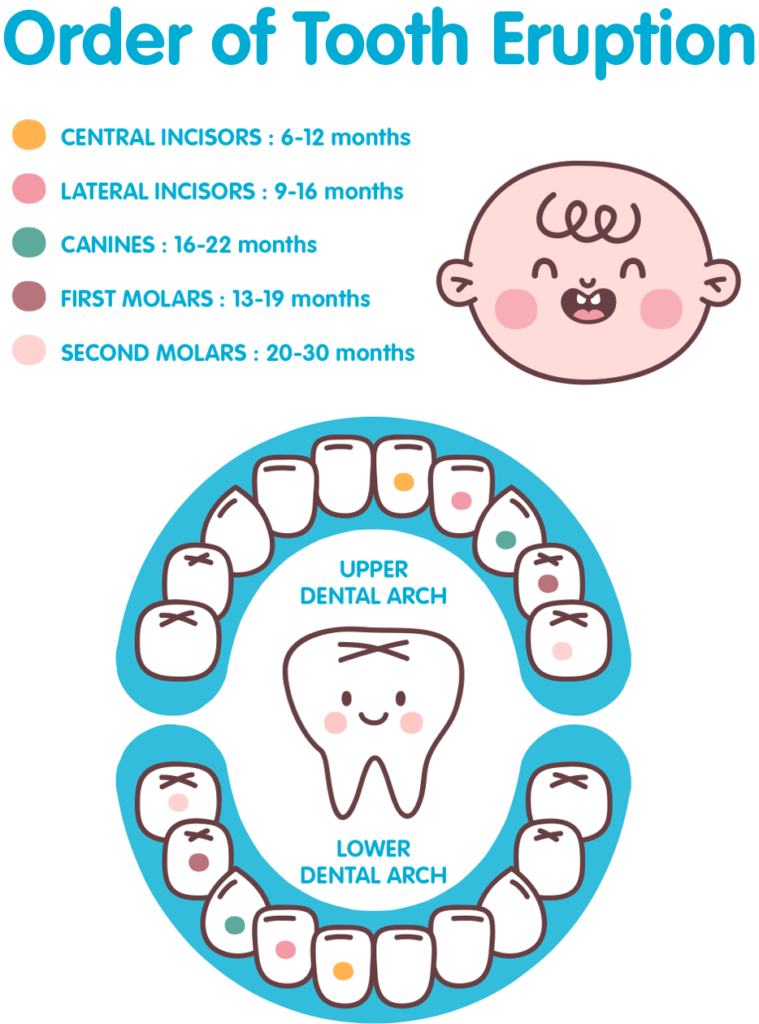
INFOGRAPHIC: Each baby tooth emerges at a different time, and this process can be divided into five stages.
This infographic is a great reminder for parents to know when to expect each stage of tooth eruption. It can also serve as a diary to record the dates when each tooth appears. It’s an excellent resource to introduce the story of the Tooth Fairy and help children become familiar with their baby teeth.
Authors: Dr. Antonija Jurela, DMD, Orthodontic Specialist, and Marija Hadjić, Dental Assistant
Source: maminkutak.com
How complex is the dental issue you’re facing? What do you hope to achieve by wearing braces? Is it important for you that the braces are discreet, or are you looking for the fastest and most effective solution?
The expert who can best recommend the ideal type of treatment based on your goals and current dental condition is an orthodontist, a dentist specialized in correcting misaligned teeth and jaws, as well as enhancing the aesthetics of your smile and facial appearance.
Although orthodontic treatment significantly impacts facial aesthetics, its primary goal is always to prolong the lifespan of the teeth. Whether it concerns a child’s jaw or an adult’s, properly aligned teeth better withstand the forces of chewing, which is why orthodontic therapy is recommended for everyone.
In fact, anyone who wants a more attractive smile and improved chewing function can benefit from braces. The specific type of appliance, however, depends on various factors.
What problems can braces correct?
Orthodontic treatment is used to address a variety of issues, including:
A timely visit to the orthodontist is especially important for children to monitor jaw growth and development, and to intervene early in cases of anomalies, such as forced bites or harmful oral habits.
What are different types of braces?
There are different types of orthodontic braces, and the choice of treatment method depends on various factors, including the patient’s age and the complexity of the anomaly to be corrected.
Removable braces are intended for growing patients. They guide jaw growth and preserve space for permanent teeth.
Fixed braces consist of brackets bonded to the teeth and a wire that connects them. Brackets can be metal or ceramic (transparent).
Clear Aligners are a modern type of removable braces, similar to trays, made from transparent plastic.
When to choose fixed vs. removable braces?
Removable braces are generally recommended for children, for example, when there is a step between the upper and lower jaws, a deep bite, or a front tooth positioned in a reverse bite.
In some cases, the anomaly can be fully corrected with removable braces therapy, but in certain situations, fixed orthodontic treatment may be needed after the removable phase. Fixed braces are the best choice when complex tooth movements are required.
It is important to note that fixed brace therapy is only possible once the teeth are fully developed—that is, when growth has stopped and dental development is complete.
What is the ideal time to start wearing braces?
For children, the ideal age for the first orthodontic evaluation is around seven to eight years old, while most removable braces therapies begin around the age of ten. The exact timing of treatment depends on the type of anomaly, the maturity of the teeth, and the child’s cooperation.
The start of fixed orthodontic treatment is recommended only once the growth and development of the permanent tooth roots are complete, which can vary from child to child. In some anomalies, the start of fixed therapy should be delayed until closer to the time when jaw growth is finished, usually around the age of sixteen.
For adults, there is no ideal age to begin therapy.
Any moment when a patient decides to improve their smile and bite, regardless of age, is a good time to start treatment.
What does the process of placing and wearing braces look like?
The process of creating, placing, and wearing braces is specific to each type of orthodontic treatment.
Fixed Braces
Placing fixed braces takes approximately half an hour. The teeth are first prepared for the brackets and coated with special acidic components. Then, a liquid adhesive is applied, and the brackets are bonded to each tooth. Once the brackets are in place, the wire is threaded through them.
Follow-up appointments are scheduled every six to eight weeks, depending on the stage of treatment. Therapy usually lasts two to three years, depending on the initial dental anomaly.
Removable Braces
Creating removable braces requires several visits to the orthodontist. After scanning the patient’s jaw, a model is made on which the orthodontist designs the correct bite. The template is then tried on the patient, adjustments are made if necessary, and based on this, the final appliance is manufactured.
Removable braces should be worn 14 to 16 hours per day, with follow-up appointments every 10 to 12 weeks.
Clear Aligners
After scanning the jaw and taking photographs of the patient, tooth movement is planned using specialized software, followed by a simulation that introduces the patient to the details of the treatment.
The production of the aligners takes about two to three weeks. When the aligners are delivered to the patient, attachments are bonded to the teeth (small bumps or ridges made from composite material), and stripping is performed if necessary (a nearly imperceptible and completely safe reshaping of the teeth to allow proper alignment). The first set of aligners is then tried on to ensure a proper fit.
When it comes to clear aligners, check-ups are generally less frequent than with fixed braces. Aligners are replaced every week, and it is recommended to wear them 22 hours a day, essentially all the time except while eating.
Can I wear braces if I’m missing a tooth?
Every orthodontic treatment has its own indication, and each type of appliance has advantages and disadvantages depending on the anomaly being treated.
If the issue is hypodontia (a congenital missing tooth) or a tooth is missing due to extraction, the most effective form of therapy is usually a fixed brace, often combined with prosthetics or aesthetic tooth reconstruction.
How to care for your orthodontic appliance?
Regardless of the type of orthodontic treatment, it is especially important to maintain good oral hygiene. For removable braces and clear aligners, you should also take care of the appliance itself.
Removable braces should be cleaned with water, a toothbrush, and toothpaste every time they are taken out of the mouth and stored in their designated case. If tartar builds up on the appliance, deposits can be removed using Corega tablets.
When it comes to fixed braces, in addition to maintaining regular oral hygiene, which includes using interdental brushes to remove plaque and any leftover food particles, it’s also important to adjust your diet during treatment. To protect the brackets and ensure the treatment progresses smoothly, you should avoid biting into hard or chewy foods with your front teeth and stay away from sticky foods such as candy, popcorn, and other snacks. It is recommended to cut all food into smaller pieces and chew gently with your back teeth.
If you are using clear aligners, it is very important to note that they should not be cleaned with hot water, and you should be careful not to consume very hot drinks, as clear aligners are made from a special type of plastic that can deform under heat. You should also avoid cleaning them with alcohol or other harsh cleaning agents. Clean your aligners using a toothbrush and cold water.
How to keep your teeth in alignment after removing braces?
After orthodontic treatment, which can last several years, everyone wants to maintain the results achieved. This is where a retainer comes in—a clear, removable device made based on a scan of your dental arches at the end of your orthodontic treatment. How long you will need to wear the retainer depends on the type of initial dental irregularity, and your orthodontist will provide detailed instructions during your regular check-ups.
In certain clinical situations, such as when a diastema (an increased gap between teeth) is present before treatment begins, an additional fixed retainer is placed alongside the removable one. This involves a thin, special wire bonded to specific teeth on the inner side, making it invisible. It helps prevent the gap from reappearing.
Retention is a long-term process, often lifelong, and regular check-ups are essential to maintain the results of the treatment. The frequency of wearing the retainer is gradually reduced, but always strictly according to the orthodontist’s recommendations.
Madalina Elena Gorečan, DMD, Orthodontic Specialist
Izvor: meddox.com
Although most adults choose orthodontic treatment primarily for aesthetic reasons, a beautiful smile is just one of the benefits of correcting teeth at any age.
With the help of orthodontic treatment—which involves correcting both aesthetic and functional irregularities in the position of teeth and dental arches—it is possible to address a range of issues, such as misaligned bites or gaps between teeth. These issues can affect gum health, and correcting them makes it easier to maintain healthy teeth for a longer time.
Who should wear braces?
Braces are recommended for anyone who is unhappy with the position of their teeth and wants to achieve a new smile with a minimally invasive approach. Orthodontic treatment is suitable for all age groups.
In addition to creating an attractive smile that boosts self-confidence, orthodontic treatment aligns the teeth properly, making it easier to maintain oral hygiene and clean between teeth. This helps reduce the risk of cavities and gum disease.
Additionally, when teeth are properly aligned, the risk of uneven wear is reduced. Orthodontic treatment can also correct certain speech and chewing issues, and sometimes even problems in the jaw joint.
Similarly, an increasing number of adult patients are choosing orthodontic treatment to create a solid foundation for future prosthetic or implant-based restorations.
How long does one wear braces?
The duration of wearing braces is truly individual and does not depend on the patient’s age, but on the complexity of the orthodontic issue.
Treatment usually lasts from one to two years, although it can sometimes be shorter or longer.
Which types of braces are recommended for adults?
The most common types of braces today are fixed braces and clear aligners. In some cases, both techniques are combined in a single treatment, which is referred to as hybrid orthodontics.
Fixed braces consist of brackets and archwires connected with thin wires or elastic bands. The brackets can be either clear (monocrystalline ceramic) or metal. Adult patients most often choose monocrystalline ceramic brackets for their aesthetic appeal.
Clear aligners are removable orthodontic devices made up of a set of transparent trays that the patient can put in and take out themselves.
When choosing a type of braces for adults, several factors are considered, ranging from the severity of the orthodontic issue to the patient’s preferences. For adult patients, it is often very important that the braces are as discreet as possible, so they usually opt for clear aligners if the treatment indications allow.
Is any preparation needed before getting braces?
Before starting orthodontic treatment, any existing cavities, periapical issues (inflammation at the tip of the tooth root), or similar problems should be
treated. A healthy periodontium is especially important, so it is recommended to remove any tartar before getting braces, if present.
Can I wear fixed braces if I have a dental implant?
A dental implant is not a contraindication for fixed braces, so you can wear them.
What does the process of installing fixed braces look like?
The procedure takes about 15 minutes and is completely painless. It involves attaching the brackets and archwires to the teeth.
Will fixed braces damage my teeth?
Braces will not damage your teeth, whether they are fixed braces or clear aligners. Brackets are attached to the tooth surface using an orthodontic light-cured adhesive, which is polished at the end of treatment without any effect on the tooth enamel.
Does wearing braces hurt?
Wearing braces can sometimes cause minor irritation or discomfort; however, this is temporary, and your orthodontist will provide advice on how to minimize it.
How to care for your braces’ hygiene?
Maintaining good oral hygiene while wearing braces is extremely important. Ideally, you should brush your teeth after every meal. In addition to a toothbrush and toothpaste, you will need to use other oral hygiene tools, such as dental floss and interdental brushes.
If you have fixed braces, extra care is needed to thoroughly clean around the brackets. A water flosser can be very helpful for this.
If you are undergoing treatment with clear aligners, cleaning them is very simple—just use cold water and a toothbrush.
Do I need to be careful about what and how I eat while wearing fixed braces?
Your diet will need some adjustment during treatment with fixed braces. You should avoid biting into hard or chewy foods with your front teeth to prevent damaging parts of the braces. It is recommended to cut food into smaller pieces and chew with your back teeth.
What can I do to achieve the best possible results from my treatment?
To ensure the best possible results from orthodontic treatment, patient cooperation is essential, including attending regular check ups and maintaining good oral hygiene. Patient compliance is especially important when using clear aligners, as they must be worn full-time. The only exceptions are when eating or brushing your teeth.
What happens after I get my braces removed?
After your braces are removed, you will receive a retainer. A retainer is a clear tray worn at night to maintain the results of your orthodontic treatment.For the first year after treatment, it is recommended to wear the retainer every night. After that, during regular check-ups—typically every six months—your orthodontist will determine when it is appropriate to reduce the frequency of retainer use.
Iva Tuškan, DMD
Source: meddox.com
For a long time, the first association with dentistry was visiting the dentist only when you had a toothache. Today, alongside functionality, aesthetics plays an increasingly important role in dentistry, improving patients’ psycho-social quality of life. A smile has a significant impact on overall satisfaction and self-confidence.
Due to high demand, aesthetic dentistry is becoming increasingly important. Patients visit the dentist not only for regular check-ups and treatment of pain or dental issues but also to correct minor or major cosmetic imperfections. New methods are constantly being introduced to help patients achieve a perfect smile quickly, simply, safely, and painlessly according to their preferences.
The most important factors in dentistry when choosing materials have traditionally been their physical and mechanical properties. Recently, however, aesthetic characteristics have become increasingly significant. As early as the 1960s, the desire for improved aesthetics led to the development of composite materials.
The most common question patients ask before an aesthetic dental restoration is whether the “margin” of the restoration will be visible. The primary goal of any cosmetic dental procedure is to achieve a completely natural-looking restoration, without visible transitions or color differences from the natural teeth. Advances in dental material technology now allow us to restore lost tooth tissue quickly and with minimal invasiveness, bringing patients’ smiles back to life.
What Is the difference between ceramic and composite veneers?
Although ceramic veneers are considered one of the most beautiful dental restorations, their preparation often requires minimal tooth reduction and usually several visits. In contrast, composite veneers can be completed in a single visit, are minimally invasive, and typically do not require any prior removal of tooth structure. The injection technique is one of the most advanced methods for aesthetic tooth restoration. Unlike traditional veneers and crowns, which involve removing or grinding part of the tooth, the injection technique is completely non-invasive ("non-prep"). It allows natural teeth to be enhanced without any drilling.
Who are candidates for the injection technique?
Candidates are patients who are unhappy with their teeth' color, shape, or alignment but do not want them to be drilled. Treating the front teeth is often necessary as a final step after orthodontic treatment to optimize both aesthetics and function.
What does the injection technique procedure look like?
For us dentists, it is imperative that patients feel comfortable in the clinic. During the first examination, the overall oral health is assessed, and patients' wishes are listened to to achieve the desired result together. If you are a candidate for the injection technique, an impression of your teeth is taken and sent to a dental laboratory. There, a new smile is digitally or analogically designed, and using a transparent silicone guide, the material is "injected" onto the teeth. Afterward, the teeth are polished so that no visible transition remains between the natural tooth and the artificial material.
Is the procedure painful?
The injection technique is entirely painless. Therefore, if you want a beautiful smile in a short amount of time, this method is the right choice for you. Today, a beautiful smile can be achieved using modern, minimally invasive cosmetic dentistry methods. The injection technique is an ideal option for anyone seeking this path to a new, enhanced smile.
Dr. Sc. Antonija Jurela, DMD, Orthodontic Specialist
Tena Stilinović, DMD
Source: The List magazine